How to Conserve Energy Whilst Working Remotely
 With the cost of living continuing to rise and the colder months on the way, many of us will be worrying about our energy bills over winter and into next year. Those of us who continue to work from home will have the added concern of knowing that we need to ensure we have an efficient and comfortable space to work from during the day, as well as a snug and relaxed place to enjoy in our free time, without sending already high bills even higher.
So, what can we do if we cannot, or do not want, to return to an office to work. ILSPA have compiled our top tips for how to save energy whilst working from home.
1. Location, Location, Location
 Registration for The PA Show Canary Wharf is now live, and you can apply for your pass today!
 This is the third and final article this year on reforms to civil procedure where we will outline the Court’s expanding use of online case management systems.
  The saying "the eyes are the window to the soul" is a popular one. According to hiring experts, an interviewer can tell whether you are telling the truth or lying through eye contact, or lack of. Interviewers can often pay a lot of attention to your eyes and body language during an interview. This means that the importance of eye contact in non-verbal communication holds a great deal of importance.
 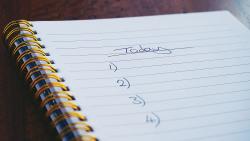 Checklists help you stay organised, better prioritise your time and see the “big picture.” They reduce the number of things you must remember, freeing up valuable headspace for the things that really matter. And if someone else needs to fill in for you, they have a step-by-step guide to tell them exactly what they need to do.
 Some people choose a certain career path in life, as they feel that it is their calling. They are naturally gifted in their field and have a passion for what they do. In psychology, this is referred to as self-actualisation. Self-actualised people strive to achieve their highest potential and find meaning in their work. They love what they do and experience great joy in performing their roles. In respect of ILSPA’s Members, they can find their work interesting and rewarding and recognise that they make a significant contribution to their legal departments.
 In a previous article on reforms to civil litigation, we looked at the expanding use of fixed costs. This month, we will consider the Civil Justice Council (CJC) review of pre-action protocols.
 Simple queries can occasionally lead to embarrassing situations if one is not adequately prepared for them. The interview question “Tell me about yourself”, for example, should be a no-brainer. However, this typical interview question continues to baffle candidates of all levels of expertise. It may be claimed that this is partly due to the open-ended nature of the question, as it is not immediately clear if the interviewer is seeking a brief biography, a full CV or a combination of the two. These concerns, like those associated with any difficult interview topic, can be addressed with appropriate preparation and understanding of the interviewer’s rationale for asking the question.
 What is a CV? CV is short for curriculum vitae, which is a Latin term meaning course of (one’s) life; it is a summary of a person’s career, education and qualifications in written form. A CV is also referred to as a résumé (French word) at times, but there is a difference. Résumés are usually single-page summaries of your work experience and background information, whereas a CV is usually longer and more comprehensive.
 Last year,