

The Frustration of Living With Anti-Social Behaviour: What Can Be Done?
 Anti-social behaviour appears to be a menace that is on the increase in today’s society. Of course, such problems have always existed to a certain extent, but there is a definite statistical rise in the number of incidents reported, and both police forces and local authorities are having to find additional resources to deal with such matters.
Anti-social behaviour may come in many guises, ranging from blatant criminal damage and harassment to noise problems coming from neighbours.
The Crime and Disorder Act 1998 attempted to address this phenomenon by way of the introduction of Anti-Social Behaviour Orders (or ASBOs). These may be obtained through Magistrates’ courts, even though in actual fact they are civil law remedies. Where a person breaches an ASBO, this will then become a criminal matter.
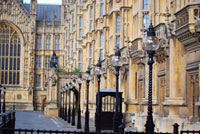
 There have, in recent years, been mounting calls for the creation of a new free-standing Supreme Court. This court would separate the highest appeal court from the second house of Parliament (the House of Lords). On 12 June 2003 the Government announced its intention to do so, and eventually the Constitutional Reform Act 2005 was enacted. This Act paved the way for the creation of a new Supreme Court for the United Kingdom. Below we examine the existing system and consider what will change (if anything) when the new Supreme Court opens for business this year in October.
 Dealing with a public body can become a very awkward and frustrating process. Indeed, it often feels as though such an entity is a law unto itself. People can become confused as to whether or not they are able to pursue any official action against such an organisation when they believe that it has acted unlawfully in some way.
 With so many different classifications of assaults, it can often be very confusing to determine the actual extent of an offence that may have occurred. To do so, it is necessary to consider a number of crucial aspects. These include the level and nature of any injuries sustained (i.e. the actus reus) and the offender’s intention to inflict these injuries in the first instance (i.e. the mens rea).
 Any legal secretaries and PAs accustomed to working within this particular area of law will realise that it is essential to maintain an appreciation of the main types of security of tenure. It is imperative to stay on the ball if you are not dealing with this type of case on a regular basis, as this knowledge will soon become hazy and may even be forgotten.
 It may be fair to say that Home Information Packs (HIPs) have not exactly been the most popular move of our Labour government in recent years. In fact, many estate agents, who have been questioned about these, have stipulated that HIPs are of no real benefit to buyers at the moment. Furthermore, they are an additional expense that people looking to sell their home can ill afford as the country enters an increasingly deepening recession.
 As of 1 April 2009, Her Majesty’s Revenue and Customs (HMRC) inspectors will have more powers to help them to deal with corporation and income tax evaders. In fact, inspectors will have the same right of entry to business premises or even home offices as is currently relevant in relation to VAT tax investigations.
.jpg) We should all be aware of the civil proceedings that may be brought against a business for certain types of unfair commercial practices. There are a number of statutes which aim to protect consumers in this regard and entitle them to seek compensation, mainly through the County Court. Much of the power to bring more serious charges and sanctions against such businesses rests at present with official government bodies. People would need to approach departments such as the Office of Fair Trading (OFT) or their Local Authority Trading Standards Service to see the unlawful business become subject to any criminal proceedings.
We should all be aware of the civil proceedings that may be brought against a business for certain types of unfair commercial practices. There are a number of statutes which aim to protect consumers in this regard and entitle them to seek compensation, mainly through the County Court. Much of the power to bring more serious charges and sanctions against such businesses rests at present with official government bodies. People would need to approach departments such as the Office of Fair Trading (OFT) or their Local Authority Trading Standards Service to see the unlawful business become subject to any criminal proceedings. If you were to ask any local authority about gatekeepers with regard to their acceptance of homeless person’s applications, you would likely be greeted with absolute denial. Regrettably, however, this is a practice that nearly all local authorities are guilty of, and if you are acting on behalf of a potentially desperate client, this added unlawful bureaucracy can be exceedingly frustrating.